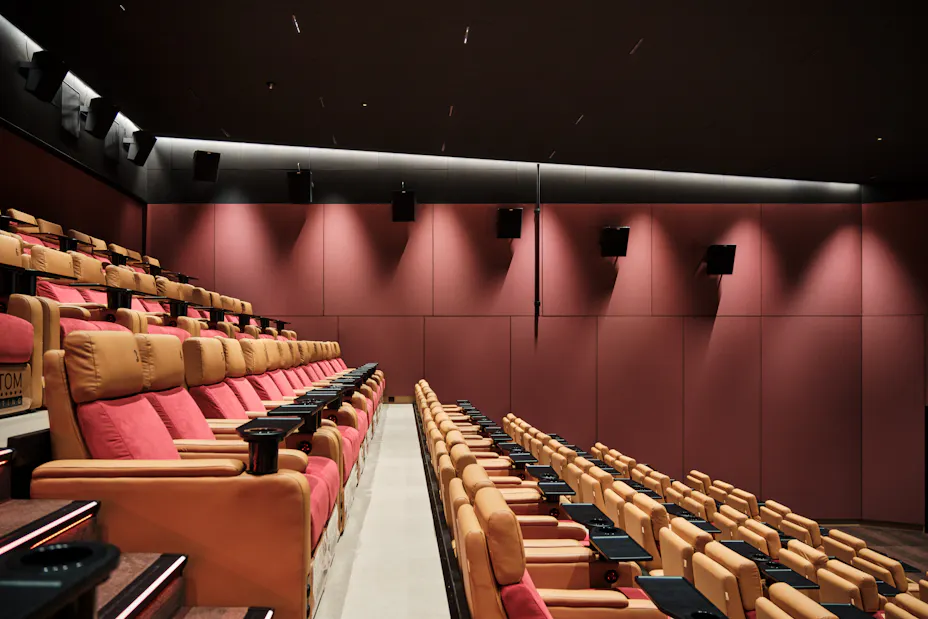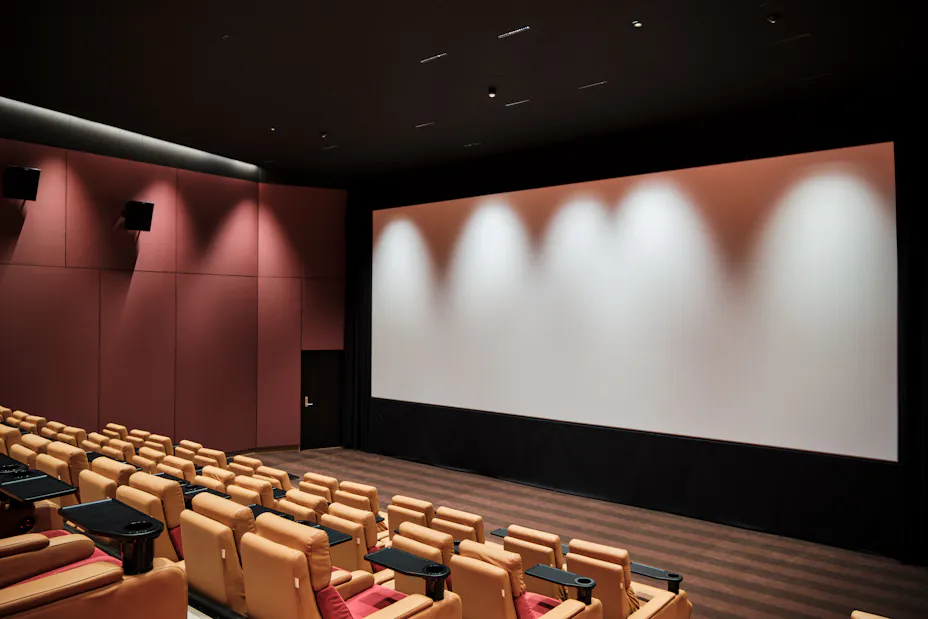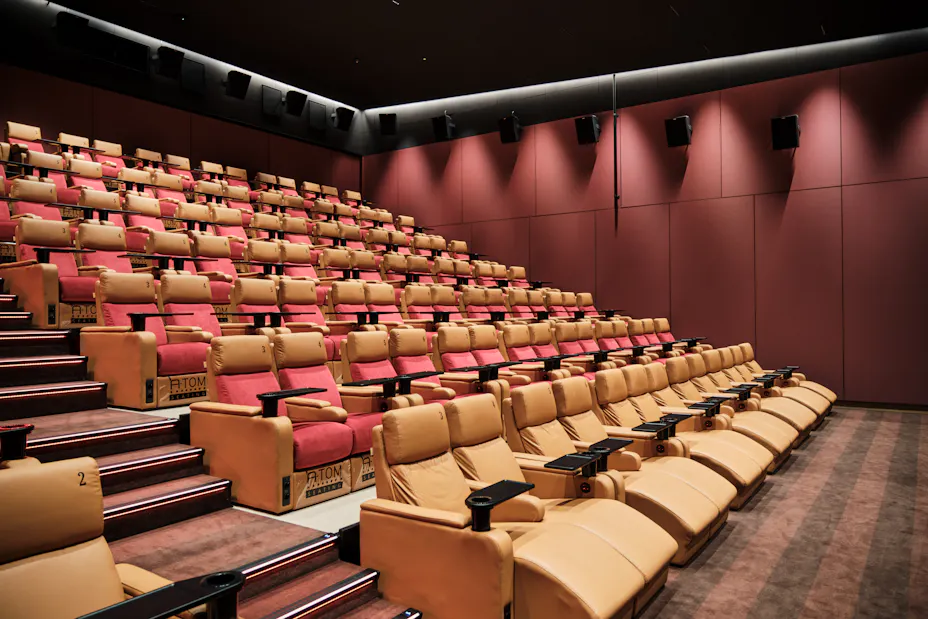

17 August 2024 was the first day of the Norwegian Film Festival 2024, this day was also the official reopening of Edda Kino in the film city of Haugesund. The cinema building from 1978 has been rehabilitated and given an extension with two new cinema halls. The cinema is owned by Haugesund municipality and the project has cost a total of NOK 67 million.
Cultural building with strong character
Edda kino is the cinema in the film city of Haugesund. The cinema has been operated here in the center of the city and the region for over 100 years, and every year in August industry professionals from home and abroad gather at the cinema on the occasion of the International Norwegian Film Festival.
Edda cinema was built in 1978 with a large multipurpose hall, for cinema and other cultural productions. Since then, the cinema has been expanded several times, and before the start of the most recent project, the cinema had five quite different cinema halls ranging from 18 to 527 seats. With the two new halls, both got their own vision, but for both halls was the idea of a premium concept with everyday luxury for everyone. Here you can come exactly as you are and feel at home, but at the same time feel that this is really grand, says Marit Sætre Færevåg, cinema manager at Edda cinema in Haugesund.
Both in Haugesund and in the rest of the country, the cinema is the cultural offer outside the home that is used by most people. And with films in all genres and for all age groups, we are also the cultural offering that reaches the widest across so-called socio-economic dividing lines. One of the things we are most concerned about is building the local cinema as a social meeting place for everyday magic, insight and good shared experiences together with others, says Marit Sætre Færevåg.
Sustainability with a centennial perspective
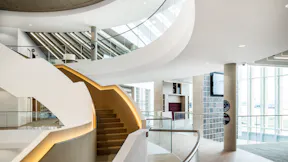
Interior architect MNIL Irene Birkeland in Arkipelet emphasizes that Edda Kino is a fantastic building with a strong character that many people have a strong relationship with. The architects therefore wanted to take care of this while at the same time preparing the cinema for the future and making sure to create something that could last for a very long time. It was important to preserve the original expression and to create a cinema facility that had a fluid transition between existing and new. We had a stanza that we should build for the next hundred years, with that, of course, also come some assumptions that deal with sustainability, quality, logistics and aesthetics, says Irene Birkeland.
Designing a cinema hall is very complex. But what we started with was the customer journey, and what the cinema of the future is. At the same time, we had this parallel course with what was our starting point in relation to the cinema system we already had and which was to be built on, and what could suit it. Then we looked at sound, aesthetics and functionality, and that it should actually accommodate a wide range of different people who have different needs that must be taken care of.
The unique cinema experience
For the project, it was important that the two new halls, Edda 6 and Edda 7, corresponded to the existing architectural style and the excisting building. When we established an overall plan for how we were going to design the interior, the idea was that we should give the two halls different character traits so that you get a unique experience when you enter the different halls. The cinema experience is about emotions and atmosphere.
When we designed the new halls, it was with a desire to add further character to the existing building stock, while at the same time ensuring a good overall look. Among other things, we chose to continue the wall and floor tiles that were the basis for large parts of the common areas, says Birkeland.
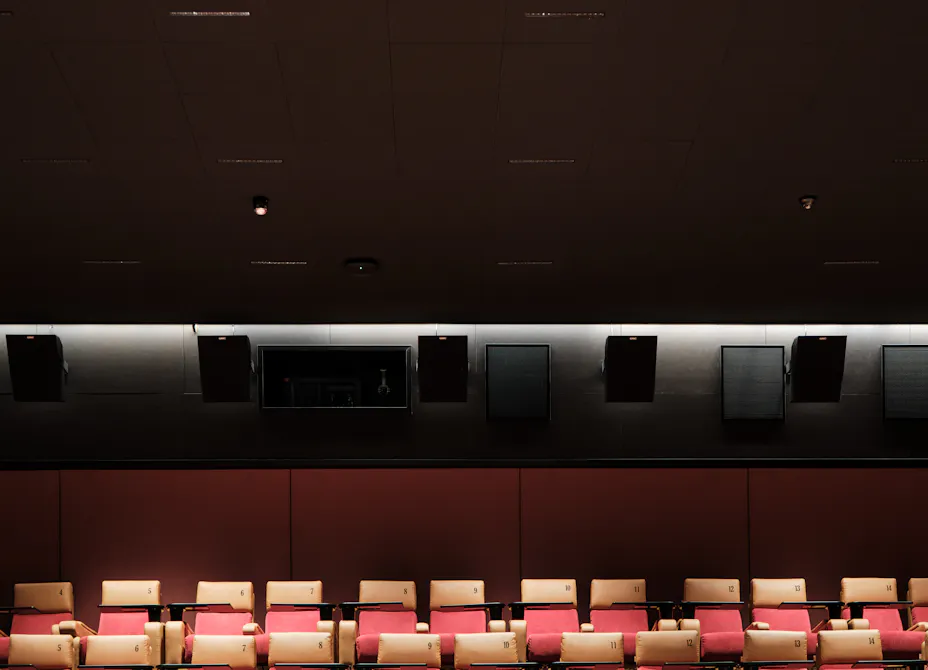
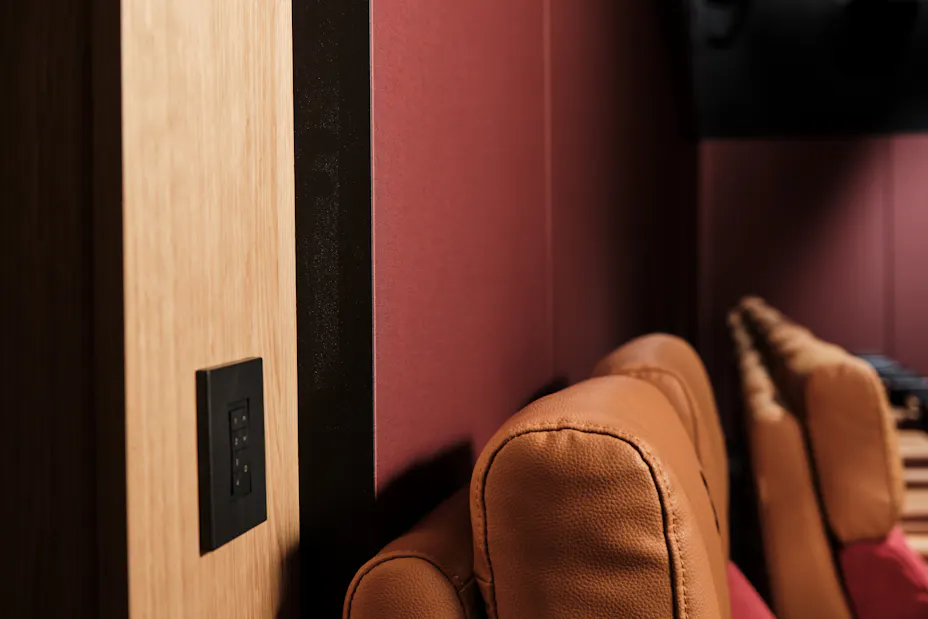
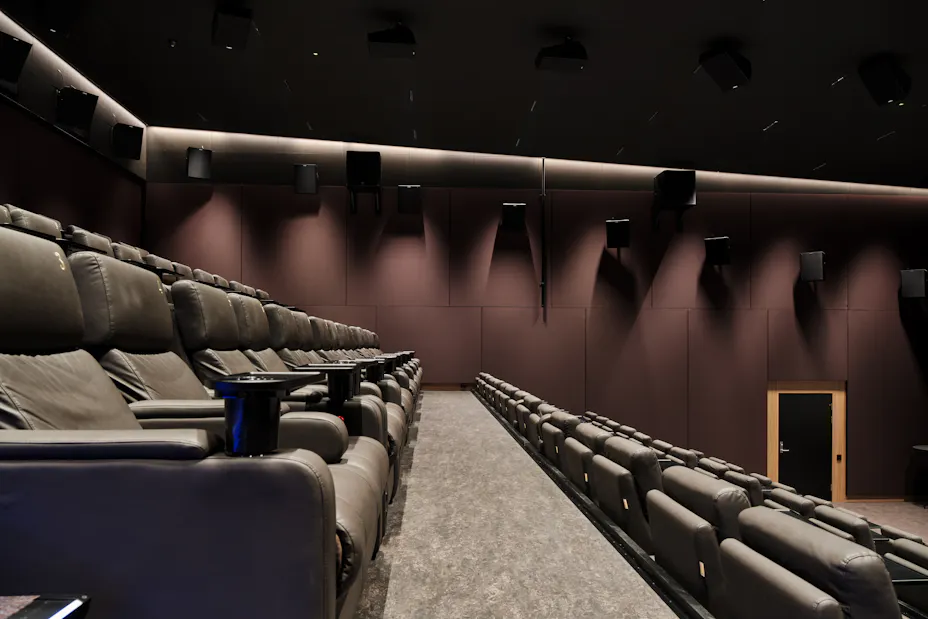
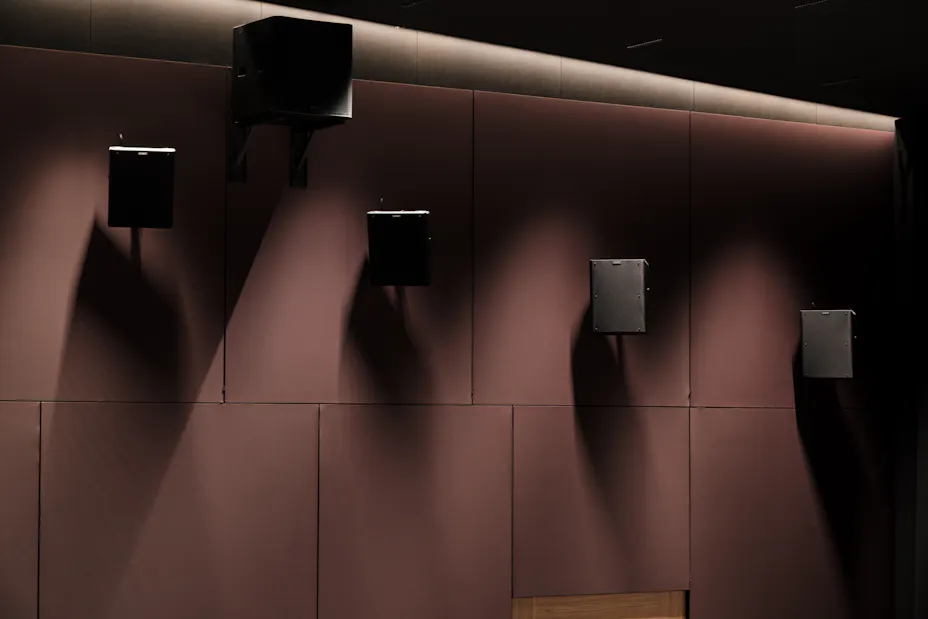
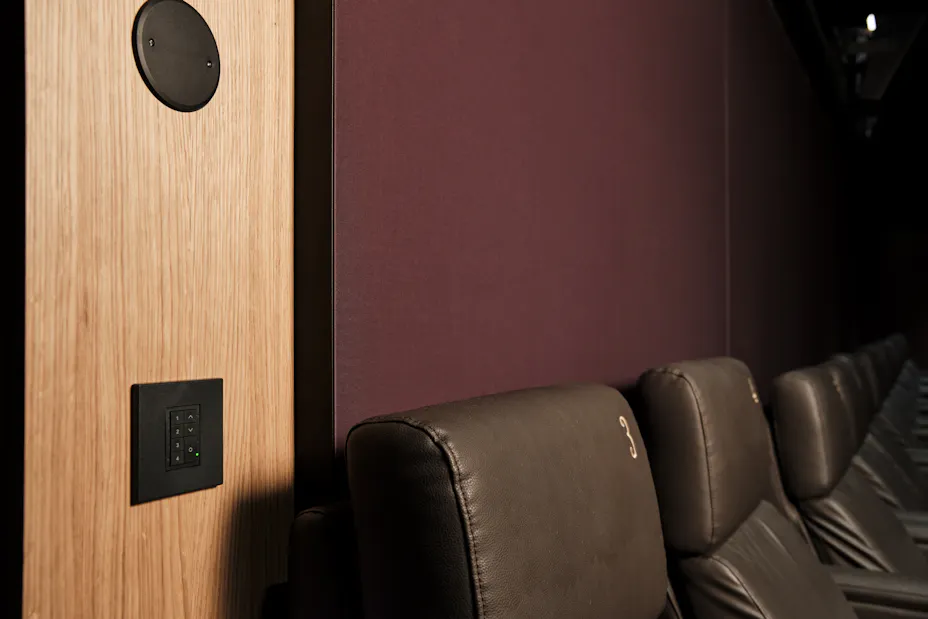
Cinema manager Marit Sætre Færevåg emphasizes that the atmosphere in a cinema hall can enhance the entire cinema experience. For us, interior choices that facilitated flexibility and the opportunity to build up under different types of atmosphere were important. In Edda 6 with brown tones on the walls, carpets and premium seats, the setting is exclusive and at the same time neutral. In Edda 7, with red tones on the walls and soft red textiles and cognac-coloured artificial leather on the seats, the hall can be built up under different types of atmosphere.
Sound image and good acoustics
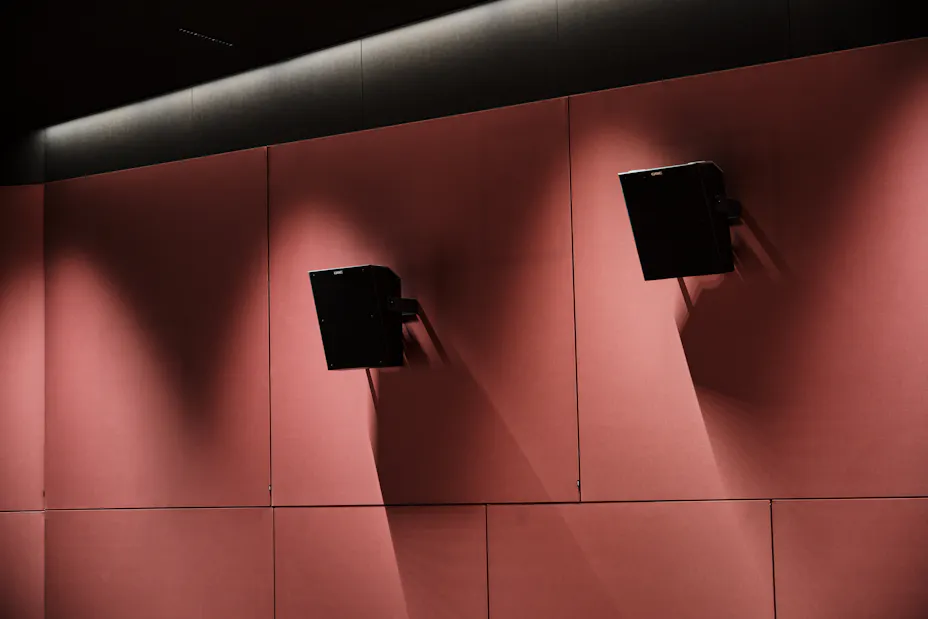
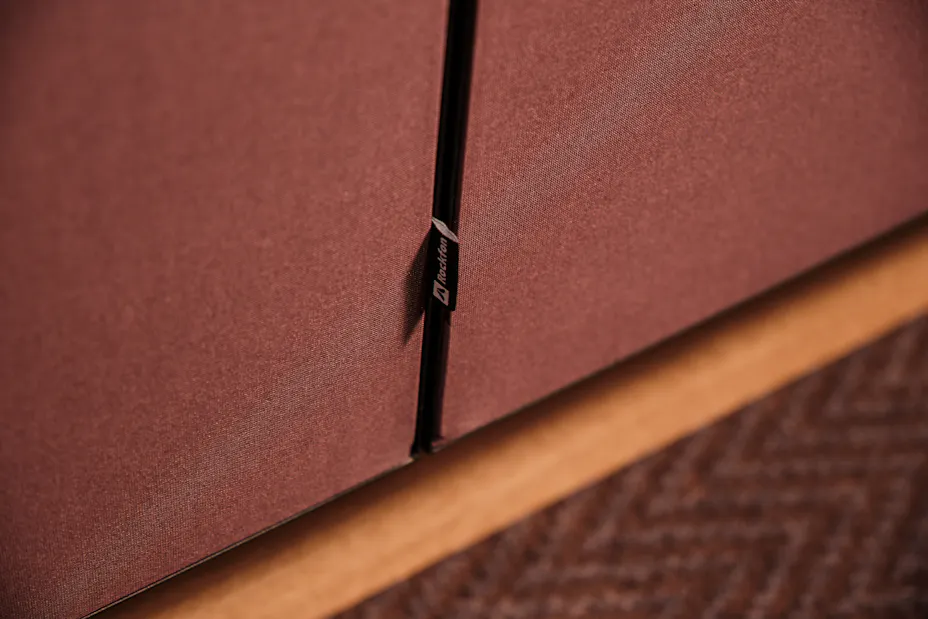
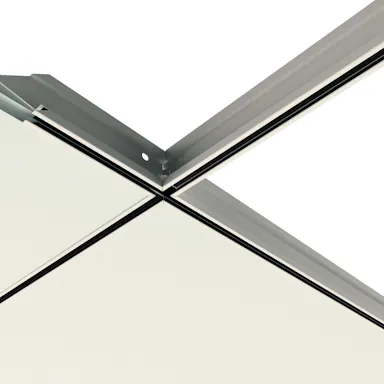
In the ceiling, Rockfon Color-all acoustic panels in the color Charcoal have been installed, while acoustics have been taken care of on the walls in the new halls with absorbent Rockfon Canva wall absorbers in the colors Scarlet and Ebony. The colors chosen from this collection fit perfectly within the concept, and it was absolutely crucial for us to find colors that worked in a standard range, says Interior Architect Irene Birkeland.
In a premium hall, sound is at least as important as image quality and seating comfort. The combination with speakers of the highest quality and optimal soundabsorption on the walls and ceiling were decisive investments to achieve premium cinema sound in the new halls at Edda Kino.
To ensure a good sound image, experts and acousticians were involved during the project, this ensured that the right surfaces were used so that the cinema halls had optimal acoustics. In relation to sound quality, product quality is absolutely crucial. We also had to have a product that was flexible and functional both in terms of logistics and assembly. It was also important that the product was transformable and that it could be preserved over a long period of time was particularly important, says the interior architect.
Transformable products provide flexibility and durability
The sustainability aspect has been in focus throughout the project, both for the cinema and for the architects. And when a new product was to be used, it was essential that the product should last for a long time. Especially when the project has a hundred-year timeline. Irene Birkeland emphasizes, - The product must be able to be transformed so that we can change it if the canvas should be slightly damaged for one reason or another. Then you can repair surface by surface, instead of redoing an entire wall or having to make very large structural interventions for very small things. This is very important in terms of sustainability, that we should of course be able to repair locally. And for the cinema, it is important that it should look nice and fresh at all times, so that it should be easy to make the small adjustments.
The biggest challenge we had in the project was to make our ideas work within the standard formats we had to work with when it came to the building lengths and heights we had at our disposal, and to find a product that was compatible with the goals we had . With Rockfon Canva in various standard formats, we were able to stitch it all together and create lines. In the transition up to the sloping ceiling, Rockfon Charcoal acoustic panels were adapted and installed.
Finding a product that we can put together in a way that means it will be flexible over time, so that we land on an end result that we believe is as functional as it can be is important. And aesthetically, of course, it should look good. We also wanted a product that was compatible with the construction phase so that it could be done in a good and manageable way. So it was absolutely crucial that it should look nice, that it should work sound-wise, and that it should be able to be assembled in a good way.
In the end, it is absolutely crucial that the end result looks good. That it looks nice and seamless, with good transitions and good craftsmanship, that's important. We will use Rockfon Canva in other projects, that's for sure, concludes Irene Birkeland.
An exciting project with details and exclusive materials
Project manager Brikt Lyng Svingen in Haakull & Ersland, who was general contractor on the project, can say that this has been an exciting project with a high level of detail and exclusive use of materials. A cinema also entails special requirements for acoustics, sound attenuation and sound transmission, while the building itself is an important building in the region, of which the public has high expectations. Location in the middle of the city centre, limited space, the combination of new build/existing build and the use of new products created various challenges during the project, but good cooperation between contractor, client, construction management, architect and suppliers led to good solutions and a good end result. We are very satisfied with the solution-oriented cooperation and follow-up from Rockfon, says Brikt Lyng Svingen.
Sustainability must be a key word in all assessments and choices we make at Edda cinema. We have been an Environmental Lighthouse for eight years and are certified for green conferences. We take very seriously the opportunity and the responsibility we have as a public arena to show that sustainable choices often also contribute to increasing the quality of the cinema experience for our guests.
The two new halls have premium seats and high comfort. When it comes to the cinema experience as a whole, sound, image and comfort are very important parameters. The exclusive sound system and Rockfon Canva wall absorbers raise the quality several notches. It's incredibly nice to be praised for a nice interior and comfortable chairs, but what I am most satisfied with in the new cinema halls is the wonderful sound absorption and the pleasant and nuanced cinema sound. It is simply magical to immerse yourself in a film in our new premium theatres, concludes cinema manager Marit Sætre Færevåg.